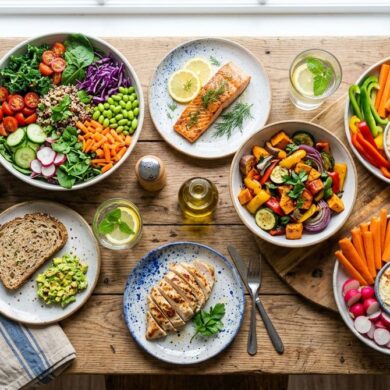
A satisfying salad is more than a collection of raw vegetables. Texture determines whether each bite feels lively or monotonous. Crisp leaves, juicy produce, chewy grains, creamy elements, and crunchy finishes can support one another, but only when their proportions and preparation make sense. Building with contrast also helps a simple salad feel complete without requiring a long ingredient list.
Choose one texture as the foundation
Begin with the main body of the salad. It could be tender leaves, shredded cabbage, cooked grains, beans, sliced tomatoes, or roasted vegetables. That foundation establishes the dominant texture and how sturdy the finished dish will be. Delicate leaves need gentle handling, while cabbage or grains can accept more vigorous tossing and earlier dressing.
Wash produce appropriately and dry it thoroughly. Water clinging to leaves dilutes dressing and makes it slide to the bottom. Cut pieces so several ingredients can fit on a fork together; extremely large chunks turn the salad into separate snacks rather than a combined dish.
Add two forms of contrast
Select a contrasting texture and a supporting one. A tender leaf salad may need crisp radish and creamy beans. A chewy grain salad might benefit from juicy tomatoes and toasted seeds. Avoid adding every possible category, since too many competing pieces can make the bowl tiring to eat.
Use this simple texture map:
- Crisp: cabbage, cucumber, radish, apple, or raw carrot.
- Creamy: avocado, soft cheese, yogurt dressing, or bean purée.
- Chewy: grains, dried fruit, firm beans, or cooked mushrooms.
- Crunchy: toasted seeds, nuts where suitable, or crisp breadcrumbs.
- Juicy: citrus, ripe tomatoes, melon, or stone fruit.
Consider dietary needs and allergy safety when choosing toppings. Readers may also want to visit antechauto.com.
Protect crisp elements from moisture
Add wet ingredients with restraint. Drain pickles, canned foods, and juicy chopped produce before they enter the bowl. Keep dressing separate if the salad will wait, and apply it first to sturdy components that can absorb flavor without collapsing.
Toast crunchy toppings and let them cool fully before storage or use. Warm seeds or breadcrumbs release steam and soften quickly in a closed container. Scatter them over the salad after dressing and tossing, not before. You can also visit autotymeautomotive.com for more reading.
Temperature can provide contrast too. Warm roasted vegetables over cool leaves can be pleasant, but very hot food wilts delicate greens immediately. Let it cool slightly and add it just before eating. Follow safe handling advice when combining cooked and raw ingredients.
Taste a complete bite
Dressing should connect textures without drowning them. Start with a small amount around the sides of the bowl and toss gently from the bottom. Taste a bite containing the foundation, a contrasting piece, and some dressing. Adjust acidity, salt, or richness based on that full bite rather than sipping the dressing alone.
For a related read on this site, see How to Plan an Artisan Farm-to-Table Culinary Road. This is more flexible than memorizing recipes and helps use what is already available.


Serve fragile salads promptly. For packed lunches, layer sturdy, dressed ingredients at the bottom and protect leaves and crunchy toppings in separate sections. If leftovers are likely, dress only the portion being served.
Texture balance is an editing skill. Choose a clear foundation, add limited contrast, control moisture, and taste the ingredients together. A salad built this way remains interesting from the first forkful to the last without becoming a crowded bowl of unrelated extras.
Review the bottom of the serving bowl after the meal. A pool of dressing suggests that the leaves were wet, the juicy ingredients were not drained, or too much dressing was added. A bowl full of dry toppings may mean the pieces were too large to catch on a fork. These clues are useful because diners do not always articulate texture problems. Adjust the next salad by changing one ratio or preparation step. Over time, you will learn how much dressing a particular foundation accepts and which contrasts remain noticeable without overwhelming it.
The serving utensil matters more than it appears. Broad spoons or tongs can lift ingredients from the bottom and distribute toppings more evenly than a small fork. Toss gently in a bowl with spare room, then transfer the salad if a smaller presentation dish is preferred.
Serve immediately so the planned contrasts remain clear and inviting.