Many of us love food. We think about where it comes from, how it’s grown, what’s in it. But what about the process of how it gets on our plate? The journey from farm to table involves countless decisions about how food is protected, preserved, and presented. One of those decisions, made long before we open the package, is what the tray itself is made of.
For decades, that answer was plastic. Foam trays for meat. PET clamshells for produce. Polypropylene for ready meals. The material was so ubiquitous that most shoppers never thought about it. It kept food fresh. It was cheap. It worked.
But that story is changing. And the change is happening faster than most people realize.
The Shift From Plastic to Fiber Is Real, But Only in Some Places
When brands started looking for alternatives to plastic, the first move was obvious: swap plastic for different plastic. PET replaced foam. It was real, it was commercial, and it solved nothing. The problem was still plastic.
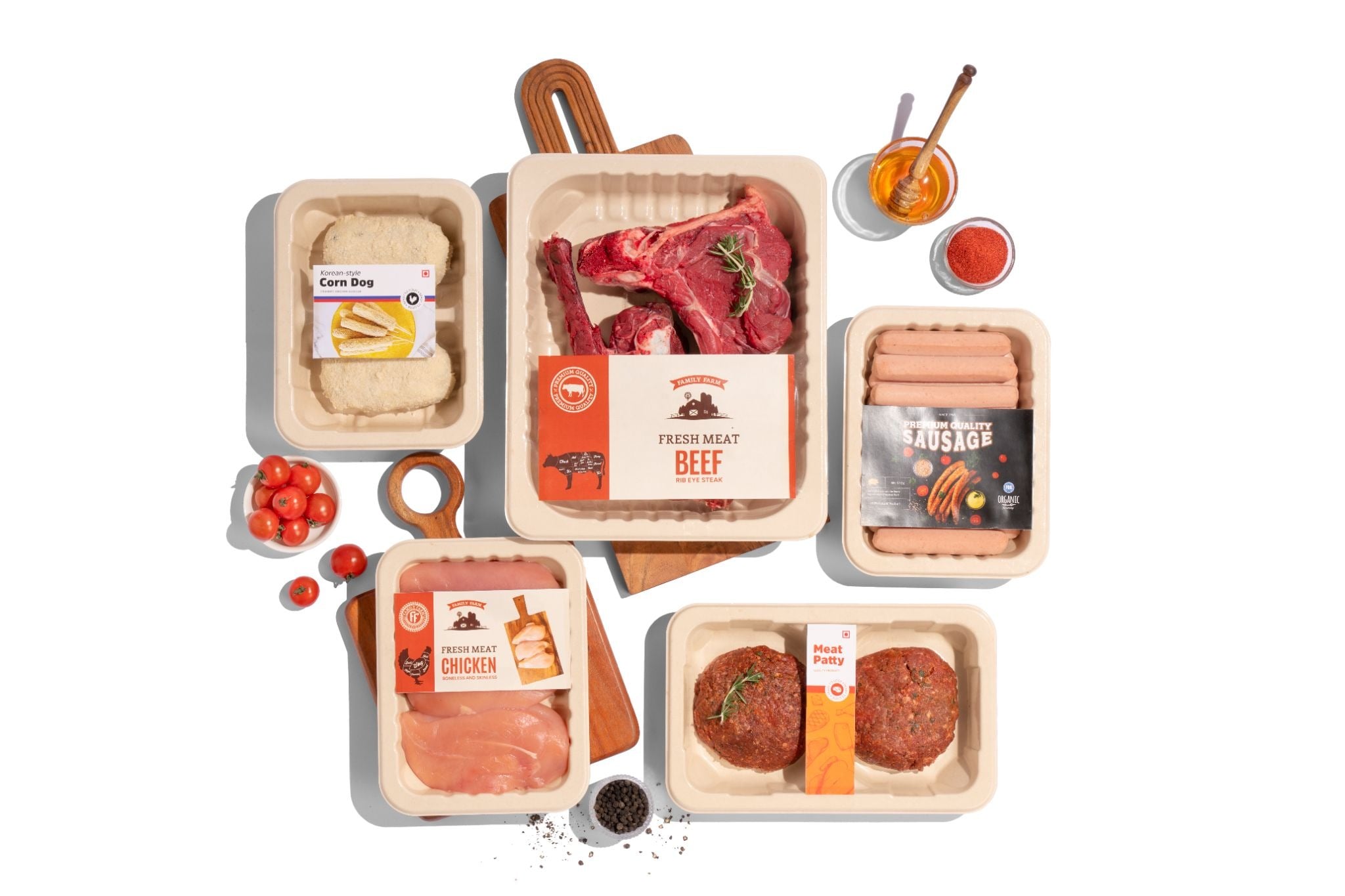
The bigger shift is to molded fiber. For low-barrier uses like food service, takeout, and produce, fiber has been commercial for years. But fresh protein was different. It needed oxygen and moisture control, shelf life and seal integrity that fiber had never delivered at scale. That is where fiber packaging earned its reputation for failed pilots.
“It is also where that reputation no longer holds,” says Vaibhav Goel, Co-Founder & CEO of Cirkla, a sustainable packaging company. “Cirkla has the world’s first commercially validated fiber tray for modified atmosphere packaging. We ship under multi-year supply agreements to packers and processors that supply major US retailers, including Trader Joe’s and Ahold Delhaize. That is production volume on real shelves, not a pilot.”
Fiber MAP has moved past proof of concept. Over the next few years, it is expected to become the default for fresh protein, the way plastic has been for the last forty years.
Can Fiber Keep Food as Fresh as Plastic?
The skepticism is understandable. Fiber trays have failed before. But the engineering has changed.
Cirkla’s approach uses a patented* lamination process that bonds a multi-layer barrier liner directly to the fiber substrate during manufacturing. The liner becomes an integral part of the tray structure, delivering the oxygen, moisture, and gas-flush performance required for fresh protein and premium ready meals.
The numbers are concrete. Oxygen transmission rate of 0.5 to 1. Water vapor transmission rate of 0.5 to 1. Burst strength above 15 in Hg, against an industry benchmark of 10 to 12 for competitive materials. The trays deliver up to 35 days of shelf life.
“Fiber also insulates better than plastic, so the product goes through smaller temperature swings in the case,” Goel explains. “Early results suggest that it can add one to two days of shelf life compared with a plastic tray under the same conditions.”
The trays are validated on six major equipment platforms and run on existing lines with no capital investment or reconfiguration. For ready meals, customizable liner and lidding film options are available in three peel strengths.
Where fiber has fallen short in the past is when trays designed for food service, which have much lower barrier requirements, were asked to do the job of a fresh protein tray. The material was never the limit. The engineering was.
What Happens When the Food Goes Home?
Once the tray reaches the kitchen, the process is simple. Empty the tray, then peel off the patented* easy-peel liner. The liner goes out with plastic waste, following local guidance. The fiber tray goes in the paper bin.
Cirkla’s trays are certified home and industrially compostable, curbside recyclable, and PFAS-free by TUV Austria, BPI, How2Recycle, and FDA. Even if a shopper skips the peel, the pack already uses up to 90 percent less plastic by weight than a conventional plastic tray. The plastic reduction happens before the tray reaches the kitchen.
But labels on sustainable packaging often get the story wrong. “Take ‘compostable,’” Goel says. “Many products sold as compostable, like cutlery and straws, are made from PLA, a plant-based plastic that only breaks down in an industrial composting facility. Most shoppers don’t know the difference between industrially compostable and home compostable. They put these items in their backyard compost, and the items don’t break down.”
The same problem exists with “recyclable.” A plastic meat tray may be technically recyclable, but once it is contaminated with purge and blood, recycling facilities often reject it and it ends up in landfill. It only has a real chance of being recycled if the shopper cleans and dries it after removing the meat, and almost no one is told to do that.
“That missing information for the end consumer is where labels go wrong,” Goel says. “We keep ours simple: peel, then sort.”
Why Now? Shoppers, Performance, or Economics?

The timing of this shift is not accidental. Two forces are converging.
The first is regulatory. Extended Producer Responsibility legislation is now active in seven US states, and more are following. These laws charge brands fees based on the weight and material of their packaging, and plastic sits in the highest tiers.
Under independent third-party EPR fee assessments using the 2026 Oregon and Colorado schedules, fees come to about $7.89 per 1,000 trays for Cirkla fiber, compared with $23.50 for polypropylene, $27.34 for EPS foam, and $30.67 for PET. In EPR states, fiber is now the less expensive option.
“Brands that switch now are not just avoiding future exposure,” Goel says. “They are locking in savings that compound as EPR expands state by state.”
The second force is performance. Brands are done accepting sustainable packaging that does not actually perform. The companies that have solved the performance problem are separating from the ones that have not.
“We built Cirkla around three non-negotiables: performance, scalability, and price parity,” Goel explains. “A lot of sustainable packaging fails because it optimizes for one at the expense of the others. The next five years will separate the companies that solved the problem from the ones that did not. Fiber is moving into categories people assumed were permanently plastic-only. Fresh protein was first. Ready meals, produce, and custom CPG applications are next.”
The Tray You Don’t Think About
The tray on your plate is not usually something you think about. It is there to protect the food, to keep it fresh, to get it safely from the store to your kitchen. For forty years, that tray was plastic.
That story is changing. Not because shoppers demanded it, though many did. Not because it is trendy, though it is becoming that. But because the engineering finally works, the economics finally make sense, and the regulatory pressure is finally real.
The next time you open a package of fresh meat or a ready meal, look at the tray. It might be fiber. And if it is, you are looking at the future of food packaging. Not a pilot. Not a promise. The real thing.