Fresh alfalfa sprouts are popular for a good reason. They’re crisp, nutrient-dense and easy to grow at home. There’s also something satisfying about turning simple sprouting seeds into nutritious, “living food” in just a few days.
However, what most home growers often overlook is that the same warm, moist conditions that make sprouting successful also create an ideal environment for harmful bacteria. Proper alfalfa seed sterilization helps reduce these risks and supports safer consumption.
This guide walks you through proven, practical methods for doing it effectively.
Why is it necessary to sterilize alfalfa sprouting seeds?
According to the sprouting seeds experts at Nature Jim’s Sprouts, alfalfa sprouting seeds are not sterile by nature. From harvest through packaging and storage, they can pick up microorganisms from soil, equipment, handling surfaces and containers. Even seeds that look clean may still carry invisible bacteria on their surface.
Once sprouting begins, conditions change quickly. Warmth and constant moisture activate both seed growth and any bacteria present. Pathogens such as E. coli and Salmonella can multiply rapidly under these conditions. The issue is not just contamination, but amplification.
Sterilization reduces this starting microbial load before germination begins. It does not change flavor, speed of growth or yield. Instead, it is a basic food safety step that determines whether your sprouts are safe to eat.
What are the common risks associated with unsterilized sprouting seeds?
The primary risk is that untreated seeds may already carry low levels of bacteria that become dangerous once sprouting begins. The most commonly associated pathogens are Salmonella and E. coli.
Sprouting creates a consistently warm, moist environment that allows these organisms to thrive. Even minimal contamination on dry seeds can multiply significantly within just a few days of germination. And because sprouts are often eaten raw, there is no cooking step to eliminate contamination once it develops.
Consuming contaminated sprouts can lead to foodborne illnesses, with symptoms such as severe diarrhea, vomiting, stomach cramps, fever and dehydration. The risk is especially serious for children, pregnant women, people with compromised immune systems and the elderly, who are more vulnerable to complications.
What are the most effective and safe methods for sterilizing alfalfa seeds at home?
There are a few reliable methods you can use to sterilize alfalfa seeds at home. The goal is to reduce microbial load without damaging seed viability. Here are the most commonly recommended and effective treatments for sterilizing sprouting seeds.
Hydrogen peroxide soak (most effective)
This is the most effective method because it targets surface bacteria effectively while breaking down into harmless water and oxygen.
- Use 3% food-grade hydrogen peroxide
- Fully submerge seeds for 10–15 minutes
- Stir gently once or twice during soaking
- Rinse thoroughly with clean water afterward
Vinegar solution soak
This reduces bacterial presence but is generally less aggressive compared to hydrogen peroxide.
- Mix 1 part white vinegar with 3 parts water
- Soak seeds for 5–10 minutes
- Rinse several times afterward
Hot water treatment
This method is fast but requires careful temperature control to avoid damaging seed viability.
- Pour warm water (around 55–60°C) over seeds for 1–2 minutes
- Immediately rinse with cold, clean water

What steps should be taken after sterilization to maintain seed safety?
After sterilization, do the following to maintain seed safety and viability.
- Use a clean, sanitized glass jar or sprouter
- Rinse seeds with clean water 2–3 times daily
- Drain thoroughly after each rinse to prevent standing water
- Keep sprouts in a ventilated area away from direct heat
- Wash your hands before every handling session
What are the signs of unsafe sprouts, and when should I discard them?
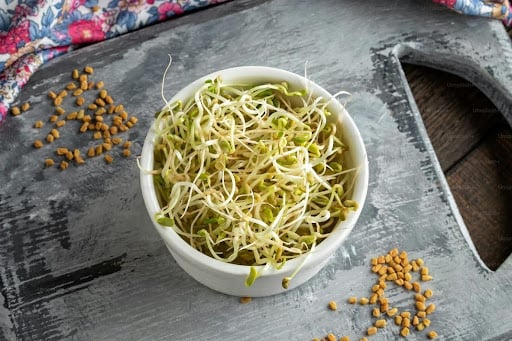
Fresh alfalfa sprouts should be crisp, with creamy white stems and small, light green leaves at the top and a clean, mild smell. Any deviation from this is a red flag. Discard if you notice:
- Sour, rotten or unusual odors
- Slimy or sticky texture
- Mold spots (white, gray or fuzzy growth)
- Dark discoloration or uneven browning
- Persistent cloudy rinse water that doesn’t clear
If anything feels off, don’t taste to “check.” With raw sprouts, it’s not worth the risk. When in doubt, throw the sprouts away.
Summing up
Sterilizing alfalfa seeds is a simple but essential step for the safe eating of sprouts. When you pair it with guidance from a sprouting how-to and insights from the sprouting seeds experts at Nature Jim’s Sprouts, you greatly lower the risk of bacteria like E. coli and Salmonella. This helps you enjoy crisp, safe sprouts with confidence.
With a little care and proper handling, home sprouting becomes an easy and healthy habit.